> For the complete documentation index, see [llms.txt](https://docs.inopli.com/llms.txt). Markdown versions of documentation pages are available by appending `.md` to page URLs; this page is available as [Markdown](https://docs.inopli.com/system-settings/managing-user-access/creating-end-user-accounts.md).
# Creating end user accounts
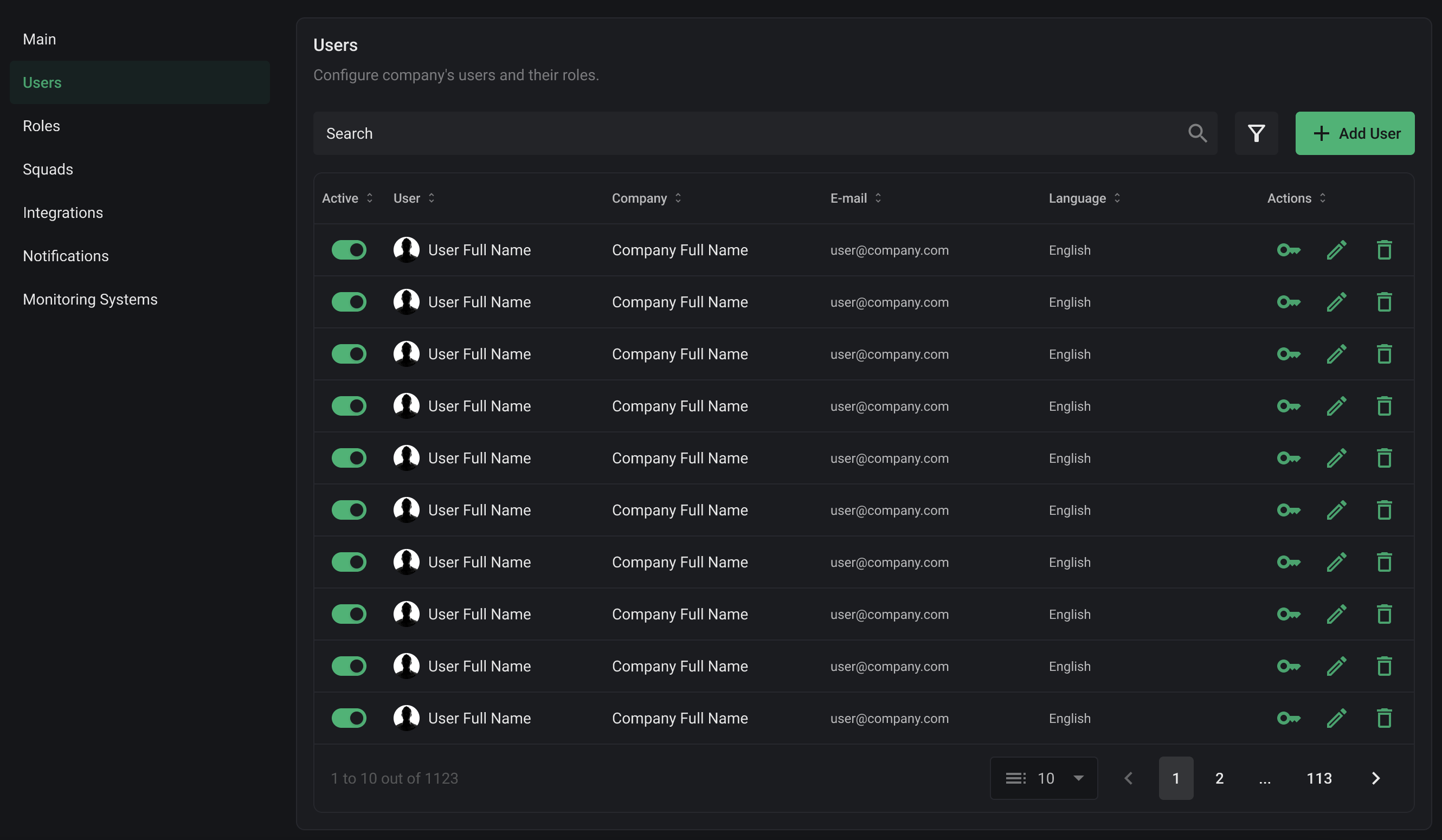
Viewing all registered users in a company is efficient and organized. The interface allows for paginated navigation and offers intuitive filters for activation status, access profile, and language. There is also a quick search functionality for the user's name. User management operations allow for easy activation, deactivation, deletion, password resetting, or profile editing.
Overview End Users
To register a new user, it is mandatory to provide a first name, last name, and an email address. Additional information, such as phone number, preferred language, and avatar, can be added to enhance profile identification.
{% hint style="warning" %}
The email must be unique on the platform.
{% endhint %}
Creating End User
The concept of 'roles' is crucial, defining the access levels and responsibilities of the user on the platform. After setting up the profile, the user will receive an email with the necessary details for the first access.